
Article written by Nahush Gowda under the guidance of Satyabrata Mishra, former ML and Data Engineer and instructor at Interview Kickstart. Reviewed by Swaminathan Iyer, a product strategist with a decade of experience in building strategies, frameworks, and technology-driven roadmaps.
Marketing is one of the most affected domains by generative AI and AI in general. Campaigns that once took weeks to map out are now being tested and refined in hours. Customers expect personalization at scale, executives expect instant insights, and the only real way to stay ahead is to get fluent in the essential AI skills for marketing that drive modern growth.
The “grunt work” in marketing has essentially been outsourced to AI (for the most part). However, most marketing professionals do not understand where to use AI and where not to. Plenty are dabbling with tools, but few know how to turn experimentation into a lasting edge. That gap is becoming the line between careers that accelerate and careers that stall out.
This article dives into the essential AI skills for marketing that you need to thrive in 2026. From prompt engineering and AI-driven analytics to ethical governance, these are the capabilities that employers are rewarding.
Key Takeaways
- AI skills are now core marketing skills. From prompt engineering to analytics, marketers who master these will outpace their peers.
- Prompt engineering is the new marketing language. Clear, structured prompts turn AI into a strategic partner instead of a gimmick.
- AI handles most research, but human judgment still matters. Marketers need to know when to trust AI insights and when to dig deeper.
- Automation and orchestration create scale. The real advantage isn’t using one tool; it’s connecting many into intelligent workflows.
- The right AI skills vary by role. Tools like AI Salary Analyzer can pinpoint which skills deliver the biggest career and salary boost.
Why AI Skills Are Non-Negotiable for Marketers in 2026?
Let’s be real: in 2026, marketing without AI is like trying to run a marathon in flip-flops. You can still move forward, but you’re going to get outpaced fast, and it’s going to hurt.
AI has slipped into every corner of the marketing world. It decides which ads you see, helps write the posts you double-tap, and even predicts which customers are about to hit “unsubscribe.”
The tools are everywhere, but here’s the catch: the tools don’t matter if you don’t know how to use them.
Employers have figured this out. They’re no longer just asking if you’ve “played around with ChatGPT.” They want marketers who can speak AI fluently, who can pull insights from messy data, guide AI tools with smart prompts, and build campaigns that don’t just look shiny but actually drive results.
And the stakes are only getting higher. A recent survey of marketing leaders showed the majority now rank AI skills as one of the most important capabilities on their teams. Translation: if you can’t bring AI expertise to the table, someone else will.
That’s why the focus now isn’t just “using AI.” It’s knowing the right skills to build, the ones that turn AI from a quick hack into a real competitive advantage. So, what exactly are those skills? Let’s dig into the top AI skills for marketing.
1. Prompt Engineering: Speaking AI’s Language
Here’s the truth: you can’t get great results from AI if you don’t know how to ask. Prompt engineering has become the new marketing language, and it is one of the most essential AI skills you can have.
At its core, a strong prompt isn’t just about throwing a question into ChatGPT or Gemini and hoping for the best. It’s about structure. The best prompts usually include five parts:
- Role assignment – telling the AI who it should “be” (e.g., a social media strategist, SEO consultant, or growth marketer).
- Context – giving the background (your industry, target audience, or campaign goals).
- Task – being clear on what you want (an outline, campaign idea, competitor analysis, etc.).
- Format – specifying the style or format you need (bullet list, blog draft, ad copy, report).
- Examples – showing the AI references or samples to match tone and quality.
When you combine these elements, you stop getting “meh” outputs and start getting content you can actually use.
Most people still treat prompts like shortcuts. A clever phrase here, a trick command there. But the forward-thinking marketers? They’ve moved way past that.
They’re building custom GPTs loaded with brand-specific instructions that act as AI teammates that already know the tone, the rules, the voice. Others are crafting prompt libraries for the whole team, creating speed and consistency across every campaign.
And here’s the interesting part: those libraries don’t just sit there. They evolve. Each campaign adds new context, refinements, and learnings. Over time, they become a living system and a real competitive edge that makes every campaign sharper, faster, and more reliable.
So if prompts still feel like “quick hacks” to you, it might be time to rethink. In AI-driven marketing, prompt engineering is the top skill. It’s an operational capability and the bedrock for everything else you’ll build with AI.
Also Read: 2025’s Smartest AI Tools for Content Marketing – Tried, Tested & Loved
2. Research and Discovery with AI
For years, market research meant long hours of clicking through reports, opening too many tabs, and piecing together scraps of insight from forums, reviews, and social feeds. By the time you had something useful, the trend had already shifted.
AI changes that rhythm. Tools like ChatGPT Deep Search, Perplexity, and Google’s new AI-powered search features can now scan huge amounts of content across the web like news, social chatter, competitor reviews, and even video transcripts, and hand back a clean, summarized view in minutes.
For most day-to-day marketing needs, this level of research is more than enough. It’s like having a research assistant who never gets tired, always digs deeper, and even suggests follow-up angles you hadn’t considered.
But let’s be clear: AI research isn’t perfect. If you’re working on high-stakes strategy, like a multi-million-dollar market entry, a detailed customer segmentation study, or validating data for a regulatory environment, traditional research methods still matter. Interviews, surveys, and hands-on analysis are irreplaceable for certain decisions.
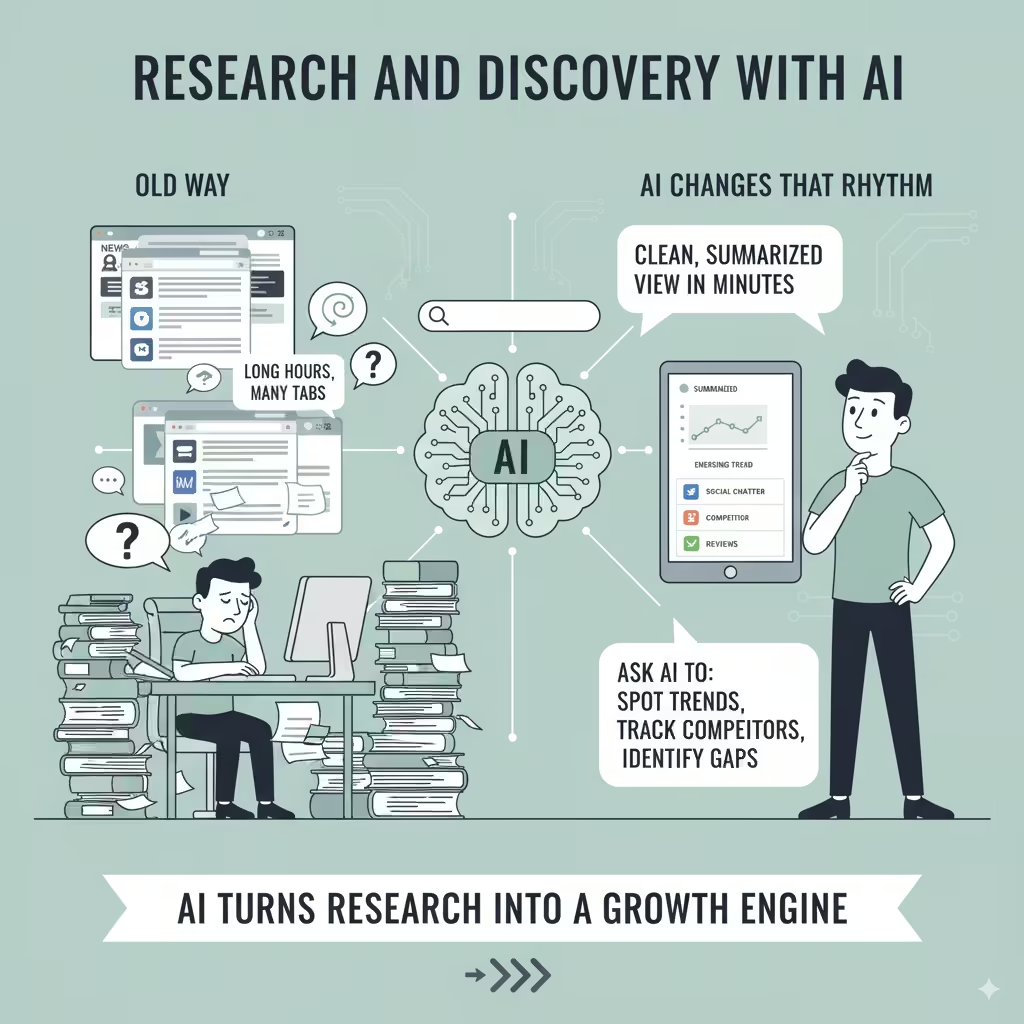
The “real” skill is in understanding what to look for, and how to ask for it. Just like with prompt engineering, the sharper your question, the better the insights. Growth-minded marketers are learning to phrase queries that surface not just today’s answers, but tomorrow’s opportunities.
For example, you could ask AI to:
- Spot emerging trends before they hit mainstream.
- Track competitor messaging across multiple channels.
- Identify gaps in customer conversations that you can position your brand to fill.
Done right, AI-powered discovery feels like having a tireless research assistant who not only finds information but also nudges you with follow-up questions you didn’t even think to ask.
And this speed matters. If your research still takes weeks, you’re already behind. By leaning into AI for discovery, you can test ideas, launch experiments, and pivot campaigns while competitors are still gathering intel.
In short. AI turns research from a bottleneck into a growth engine. And the marketers who know how to wield it are the ones who spot opportunities before anyone else does.
3. Data Literacy & Curation
AI runs on data the way engines run on fuel, and bad fuel leads to breakdowns. For marketers, this means one thing: if your data is messy, fragmented, or poorly structured, even the smartest AI tool will spit out junk.
That’s why data literacy has become one of the most essential AI skills for marketing in 2026. It’s not about turning every marketer into a data scientist; it’s about knowing how to prepare the information AI needs so the insights are reliable.
In practice, this looks like:
- Cleaning up records so customer profiles aren’t duplicated across platforms.
- Unifying user IDs so one person isn’t showing up as three different leads in your CRM.
- Structuring datasets around journeys, not isolated events, so AI can actually see how customers move from awareness to purchase.
When you understand how different data types like funnel data, campaign data, expense data, and engagement data connect, you can feed AI a coherent story instead of a pile of puzzle pieces.
The payoff? AI that doesn’t just answer questions, but delivers insights you can act on with confidence. Imagine asking, “Which campaigns actually influenced revenue last quarter?” and getting a clear, evidence-backed answer instead of a vague hunch.
Here’s the reality: marketing teams that master data literacy will pull ahead. Not because they have more data, but because they know how to curate and contextualize it. They’ll turn raw numbers into narratives that guide strategy, while others are still stuck cleaning spreadsheets.
4. AI-Augmented Analytics
For years, analytics has been the part of marketing many dreaded: endless dashboards, spreadsheets stacked with pivot tables, and late nights trying to explain why conversions dipped two points last month. AI is flipping that script.
Analytics isn’t just about reporting what happened; it’s about exploring what could happen next. This is where AI-augmented analytics comes in.
Instead of staring at static reports, you can now ask AI the kinds of questions you’d normally throw at a senior analyst:
- “What’s the most likely reason our email open rates dropped last week?”
- “Which audience segments are most likely to churn next month?”
- “If I shift 20% of ad spend from LinkedIn to TikTok, what’s the predicted impact?”
And here’s the magic: the AI doesn’t just spit back numbers. It runs scenarios, highlights blind spots, and surfaces insights that challenge your assumptions. It can say, “Yes, your open rates dipped, but notice the timing overlaps with a competitor’s launch and here’s how that might have affected engagement.”
That ability to go beyond confirmation is key. Many marketers fall into the trap of using analytics to prove what they already believe. AI breaks that cycle by testing alternatives, running stress checks, and showing you patterns you might have missed.
The other big shift is accessibility. With the right prompts, non-technical team members can dig into complex data without waiting on analysts or BI teams. Want to compare lifetime value across cohorts or test a pricing hypothesis? You can now do that in minutes with no SQL required.
Of course, AI isn’t a replacement for human judgment. It’s a co-pilot. The best marketers use AI to speed up discovery and expand possibilities, but they still decide which insights matter most for their strategy.
So the skill here isn’t “knowing analytics tools.” It’s knowing how to work with AI and asking the right questions, iterating on prompts, and sense-checking results against real-world context. Marketers who build this muscle don’t just report on the past. They use AI to peer into the future and act on it faster than their competitors.
5. Automation & Workflow Orchestration
If AI-augmented analytics is about seeing more clearly, automation and orchestration are about moving faster without losing control.
Marketing has always had automation tools. Email drip campaigns, scheduled social posts, retargeting ads. There is nothing new there. But in 2026, AI takes this to another level. Instead of isolated automations, marketers can now design end-to-end workflows where AI tools talk to each other, make adjustments in real time, and execute tasks that once took whole teams hours to complete.
Picture this:
- An AI agent pulls in competitor pricing changes.
- Another AI tool adjusts your ad copy and bidding strategy within minutes.
- A third updates your CRM, nudges leads with personalized messages, and syncs with sales.
All of this happens while you’re in a meeting, and when you come back, the campaign isn’t just running, it’s already optimized.
That’s orchestration. It’s the difference between setting up a single autopilot and building a whole fleet that works together.
But here’s where the skill comes in: this isn’t about pressing “go” on an automation platform. The marketers who win here are the ones who know how to design the blueprint. That means:
- Mapping out how data should flow across systems.
- Setting clear guardrails so AI doesn’t run off brand.
- Testing, tweaking, and re-aligning workflows so they serve business goals instead of just chasing clicks.
The danger with automation is over-automation and letting AI run wild without oversight. That’s why orchestration is as much about governance as it is about speed. You’re not just delegating tasks; you’re architecting a system where AI extends your reach without diluting your strategy.
The payoff? Scale. A marketer who understands orchestration can run campaigns at the bandwidth of a team three times their size, without sacrificing quality or brand consistency.
6. Human-AI Collaboration in Content Creation
Marketers used to think of content as a bottleneck. Writing copy, designing visuals, and editing videos all took time, and scaling production without burning out teams was nearly impossible. Then AI entered the picture, and suddenly you could generate a blog post, ad variations, or a week’s worth of social captions in seconds.
No matter how good generative AI is at creating content, it doesn’t create great marketing. It creates raw material. The best results come from using these tools as just that. Tools.
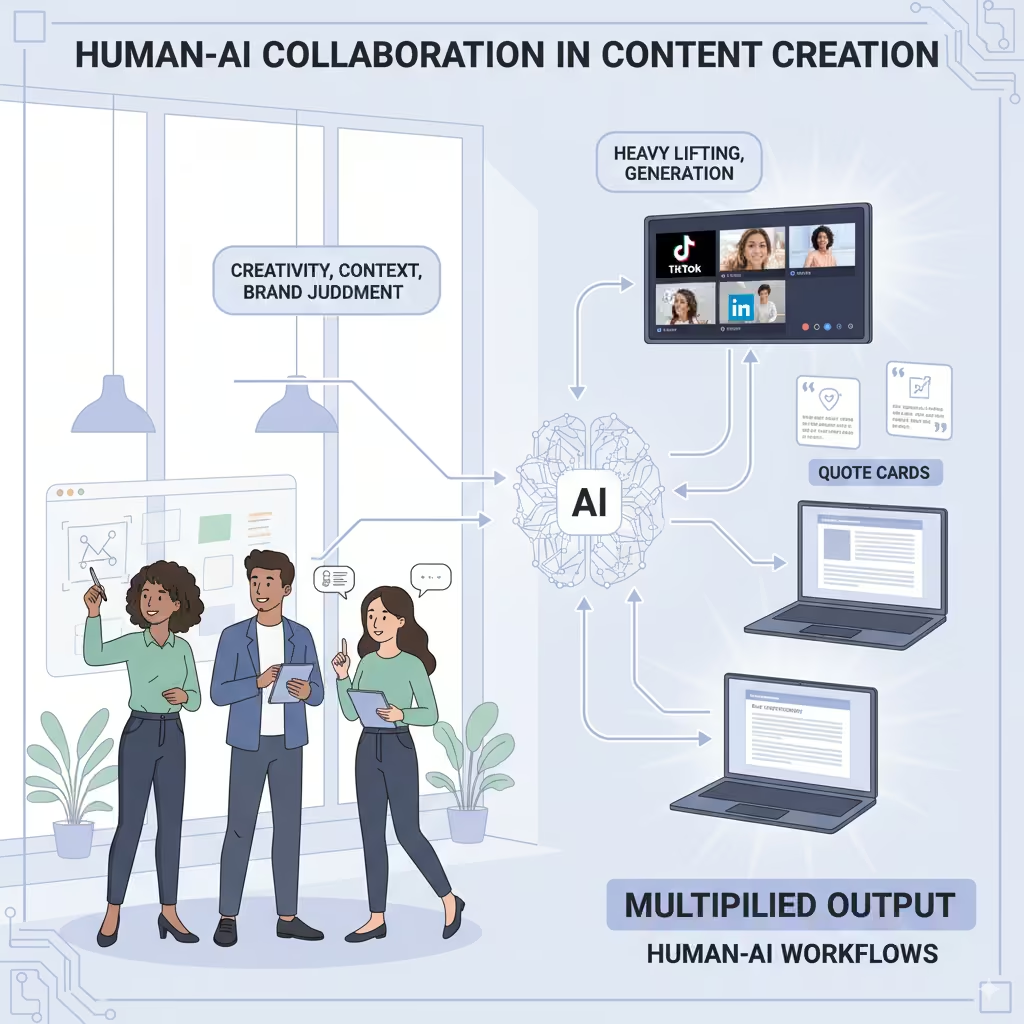
Do you see the image above? With generative AI, a writer doesn’t need to go bother a graphic designer. The writer can quickly whip up any image required for the content.
Having said that, completely using AI for generating content is also not a good way to use the power of AI. Human-AI collaboration is crucial here, where machines handle the heavy lifting and people bring the creativity, context, and brand judgment.
Take content repurposing as an example. With the right setup, AI can take a 45-minute webinar and spin it into:
- Dozens of short-form clips for TikTok or LinkedIn.
- Quote cards with key takeaways.
- Blog posts or newsletters built from the transcript.
That’s production at a scale no human team could match on its own. But it still takes a marketer to decide which sound bites hit hardest, which platforms matter most, and how to align messaging with the brand voice.
The skill here isn’t “letting AI write for you.” It’s learning how to set the vision, feed AI the right inputs, and then refine what it gives back. Done right, AI becomes a true collaborator, one that never gets tired of brainstorming, generating variations, or testing different tones.
And the payoff is massive. Teams that embrace human-AI workflows free up more time for strategy, creativity, and customer engagement, instead of being stuck in the grind of constant production. They also build resilience: AI doesn’t replace jobs, but marketers who know how to orchestrate AI in their creative process absolutely replace those who don’t.
So don’t think of AI as your competition. Think of it as your most reliable creative partner; one that multiplies your output, sharpens your ideas, and lets you focus on the work only humans can do.
Also Read: How to Use AI for Marketing in 5 Simple Steps That Deliver Big Results
7. Privacy, Governance & Ethical AI Use
AI in marketing is powerful, but it also raises some tough questions: How is customer data being used? Can the outputs be trusted? What happens if the AI makes a mistake or shows bias?
Customers are more privacy-conscious than ever, regulators are tightening rules worldwide, and brands that stumble on trust can lose loyalty overnight.
That’s why privacy and governance have become essential AI skills for marketers. It’s no longer enough to launch clever campaigns; you also need to know how to keep them compliant, ethical, and transparent.
This includes:
- Understanding where AI tools store and process data, and making sure sensitive information isn’t exposed.
- Embedding oversight into workflows, so outputs are reviewed for bias, accuracy, and brand safety.
- Building transparency into campaigns, so customers know how their data is being used and why.
The irony is, governance doesn’t slow innovation down. Done right, it actually creates the confidence organizations need to use AI more boldly. When leadership and customers trust that systems are secure and ethical, experimentation becomes easier, not harder.
Marketers who build this muscle stand out. They become the ones who can assure leadership, “Yes, this AI campaign is not only effective but also compliant and brand-safe.” That kind of assurance isn’t just good practice; it’s a career advantage.
So while it’s tempting to think only in terms of speed and creativity, the future will belong to marketers who also build trust into their AI playbook. Because in the long run, customers don’t just remember the clever ad, they remember whether they felt safe giving you their data.
How Can You Learn Top AI Skills for Marketing?
Knowing which AI skills matter is half the battle. The other half is figuring out how to actually learn them, without getting overwhelmed by the endless stream of new tools, updates, and “next big things” hitting your LinkedIn feed every week.
The good news? You don’t need to master everything. The smartest marketers in 2026 focus on building a personalized learning path: skills that match their role, their goals, and the kinds of companies they want to grow with.
Here are a few realistic ways to get there:
1. Experiment hands-on.
Reading about AI won’t cut it. The fastest learners are the ones who set aside time to test tools in real scenarios. That might mean using ChatGPT to draft ad copy, running a quick analysis in an AI-powered dashboard, or experimenting with a customer segmentation prompt. The point is to practice, not just consume content.
2. Build learning into your workflow.
Upskilling doesn’t always require formal courses. You can turn daily tasks into learning labs. For example, compare how AI writes headlines versus your own, then refine prompts until you figure out what works. Over time, those micro-experiments compound into deep knowledge.
3. Learn with others.
AI is moving too fast to go it alone. Smart teams are running internal “AI sprints” where everyone experiments with a tool, then shares results. Peer learning not only accelerates skill-building but also ensures consistency across the team.
4. Invest in structured training (where it counts).
For bigger, more technical areas like data literacy or ethical AI use, short courses and certifications can give you the foundation you need. The key is to be selective. You don’t need every badge, just the ones that close real gaps in your career path.
And here’s where strategy matters: if you’re not sure which skills to prioritize, that’s where a tool like AI Salary Analyzer comes in handy. It benchmarks your current role against market data and tells you which AI skills are most in demand for your career stage. Instead of chasing every shiny new tool, you can zero in on the ones that actually move the needle for your growth and your paycheck.
Also Read: How to Learn AI Skills to Help You Upskill
Conclusion
AI has already changed how marketing works. From the way we research and plan campaigns to how we create content, analyze data, and connect with customers. You don’t have to master every tool under the sun.
What matters is focusing on the essential AI skills for marketing that give you an edge, like prompt engineering, AI-powered research, data literacy, analytics, workflow automation, and most importantly, the ability to blend AI with human creativity.
A content marketer might need to double down on human-AI collaboration, while a growth strategist might gain more from data curation and orchestration. That’s where a tool like AI Salary Analyzer can help. It shows you exactly which skills are in demand for your role and which ones will move the needle for your salary and career trajectory.
Because at the end of the day, AI isn’t replacing marketers. Marketers with the right AI skills are replacing those who don’t keep up. The question is simple: are you building the essential AI skills that will make you one of them?
FAQs
1. How is AI used in marketing?
AI is used to power research, analyze customer data, personalize campaigns, create content, automate workflows, and even optimize ad spend in real time. For most marketers, AI has become the engine behind faster insights and smarter decisions.
2. Can marketing be taken over by AI?
No. AI won’t “take over” marketing. It automates repetitive tasks and speeds up execution, but humans are still needed for strategy, creativity, and ethical judgment. In practice, AI enhances marketing roles instead of replacing them.
3. How to use ChatGPT for marketing?
ChatGPT can draft content, brainstorm campaign ideas, generate ad copy variations, repurpose long-form content, and even analyze customer feedback. The key is learning prompt engineering so outputs match your brand’s voice and goals.
4. Which is the best AI tool for marketing?
There’s no single “best” tool; it depends on your needs. Tools like ChatGPT or Claude are great for content and ideation, Perplexity excels at research, while platforms like HubSpot AI and Jasper focus on campaign automation and content creation. The best choice is the one that integrates with your workflow.
5. What are the essential AI skills for marketers in 2026?
The top AI skills include prompt engineering, AI-driven research, data literacy, AI-augmented analytics, workflow automation, human-AI collaboration, SEO for AI search, and the ethical use of AI. These skills separate marketers who thrive from those who fall behind.